If you found this page through a speech about Iran, about mythology, about the lies of the Islamic Republic — welcome. If you found it through a rap track from the early 2000s that you still remember word for word — welcome too. You are in the right place, and so is this story.
My name is Shayan. Most of you know me now as Vajgar — the name I have adopted as I stepped into a new chapter of public life. But before the speeches, before the research articles, before the political analysis — there was a kid from Seyyed Khandan in Tehran who fell in love with hip-hop, taught himself English, and decided to rap in Farsi at a time when no one in Iran had done it before.
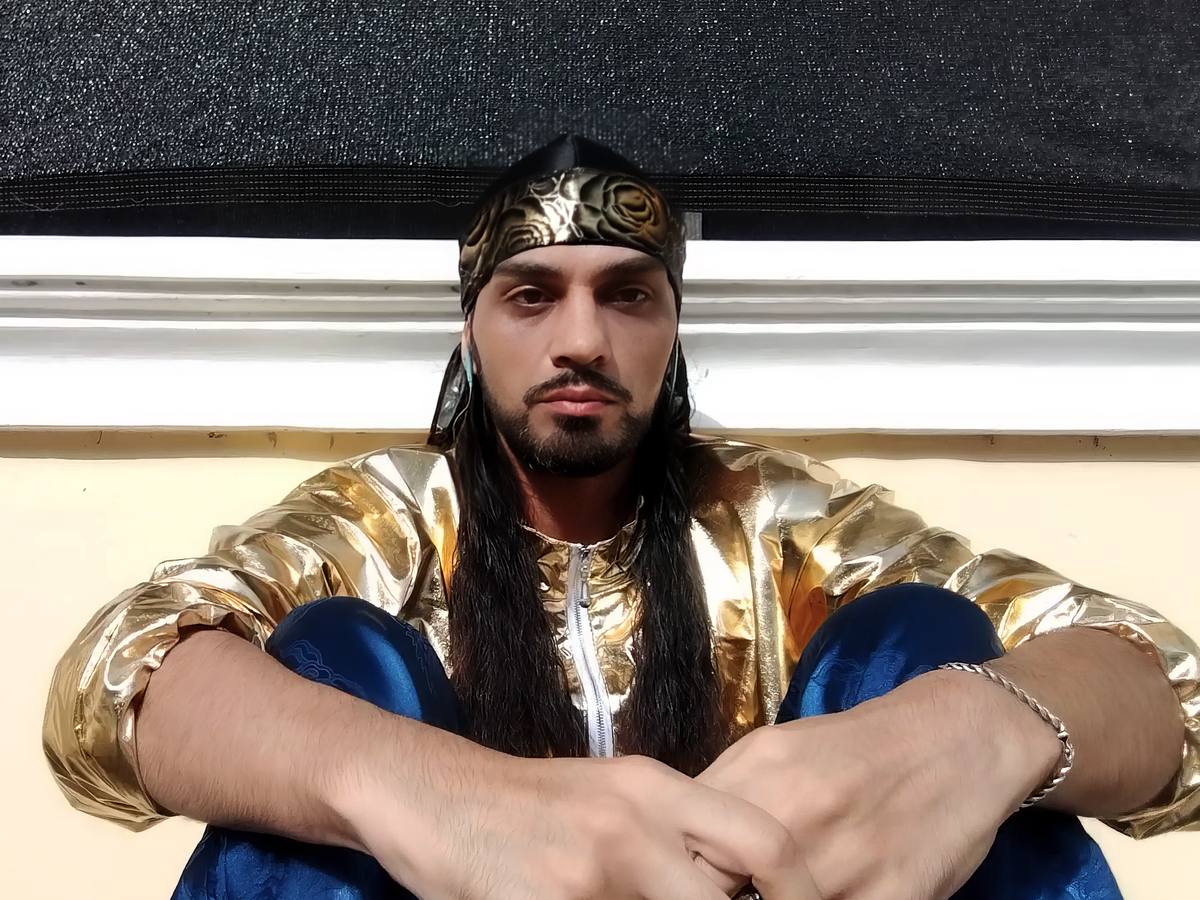
This is not a resume. It is an honest introduction — so that you know who is speaking when I speak, and why you might choose to trust or distrust what I say.
Chapter One
Born in Tehran, Raised on Its Streets
Born in Tehran in 1983, I grew up in Seyyed Khandan — a modest, middle-class neighborhood in the city — and lived there until the age of 28. I say this plainly because it matters: I am not a foreign-raised Iranian looking at my homeland through a screen. I know what the queues look like. I know what the air smells like. I know what it costs a family in Tehran to get through the month. No one can tell me I don't understand Iran, because I lived it.
From childhood, two things were obvious about me: I was stubborn, and I was fast. Fast in mathematics, fast in physics, fast at picking up languages. By the time I was in secondary school, I had mastered English — specifically the American accent — through sheer obsession with music. Michael Jackson came first. Then rap came, and everything changed.
In 1995, I heard "Gangsta's Paradise" by Coolio. Something shifted. I found Tupac Shakur shortly after and spent years memorizing verses, studying flows, understanding what made a line land. I was not just a listener — I was studying the architecture of the art form.
I also had another side. At school I was the kid who got top marks while showing up in a gel-combed hair and colored jacket that made the teachers nervous. I was disciplined in the classroom and ungovernable outside of it. This contradiction — the scholar and the street, the engineer and the artist — is not something I resolved. It is something I became.
Chapter Two
The First Iranian Rapper. Not a Claim.
In the late 1990s, I began gathering a crew. We called ourselves Sefr Bist-o-Yek (021 — Tehran's area code), rapping American verses at gatherings, winning battles, building a reputation. I was already writing original Persian verses alongside the English ones. The question I kept asking myself was simple and completely unanswered at the time: why hasn't anyone made real rap in Persian?
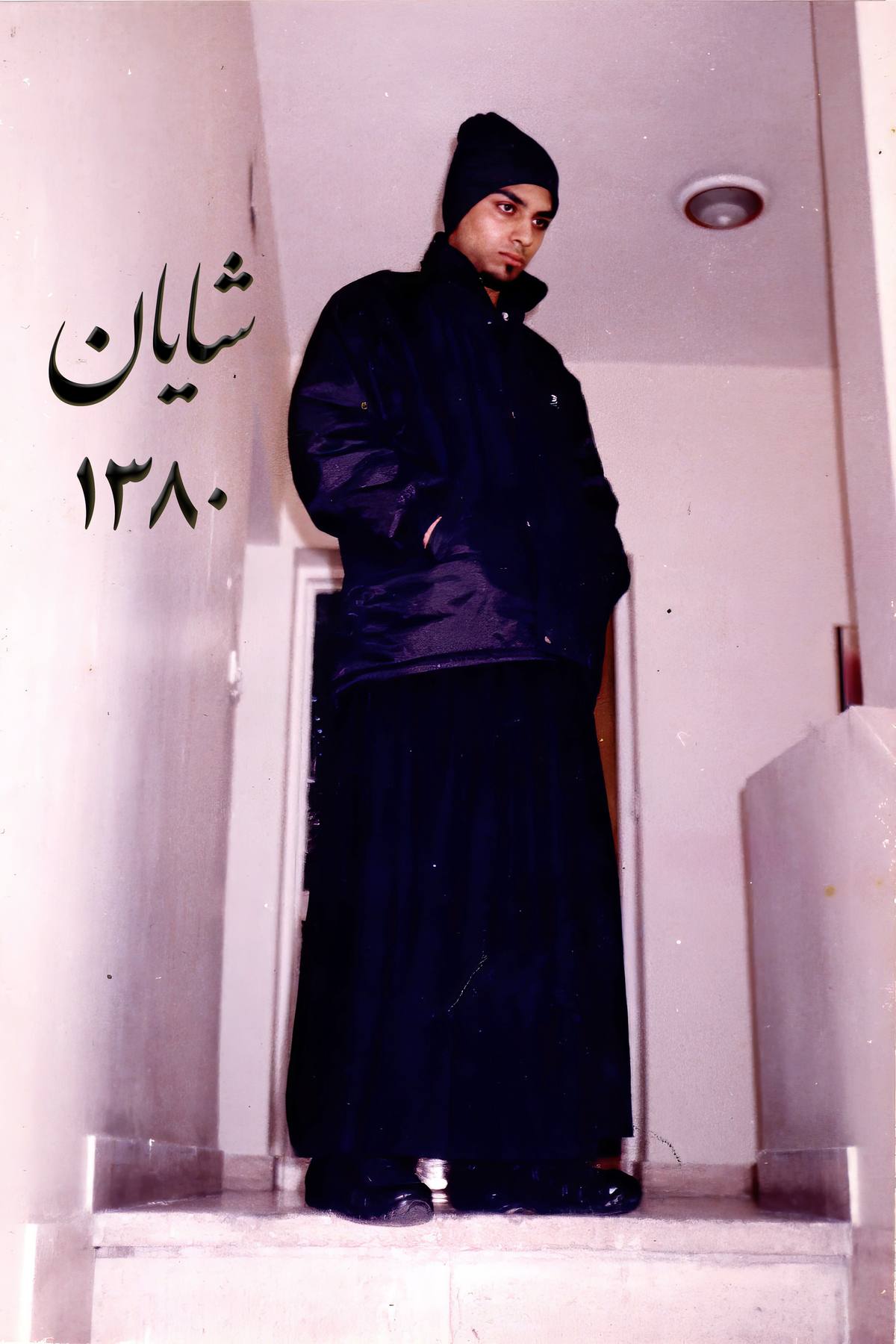
In the year 1380 (2001), I answered that question myself.
From a bedroom in Tehran, with a home computer and basic equipment, I recorded the first Persian rap songs in history — among them "Javune Irouni," "Bara Ine Ke Migiram Kam," "Donya Faghat Yani Pool," and "Shakh Neshin." These were not demos or experiments. They were complete, fully formed tracks with original beats, original verses, original production — in a language and a context no one had touched before.
The group that carried these tracks was called Brobox 021, which later became VaajKhonya — a Persian compound word I invented to translate "rap" into the language: vaaj (word, speech) + khonya (song, melody) = the music of words. It is also the name of an ancient Zoroastrian form of sacred verse. This was not accidental.
VaajKhonya is not just a group name. It is a declaration that Persian has always had the architecture for this music — we just had to remember it.
— Shayan
What followed over the next two decades was the slow, unstoppable rise of Persian rap — and the quiet fact, confirmed by the artists themselves, that it all started with those tracks.
What the Giants Said
I do not say I was first to aggrandize myself. I say it because the people who came after me said it first, and said it repeatedly and publicly:
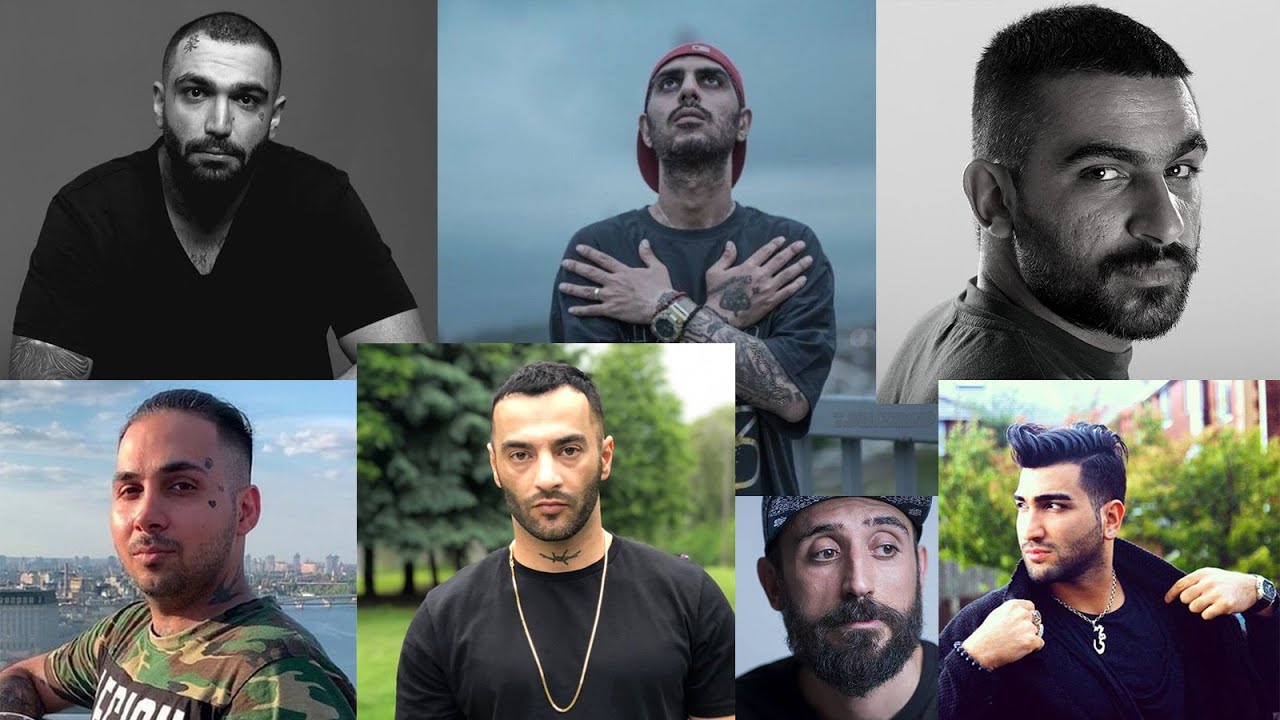
Reza Pishro — one of the biggest names in Persian rap — has publicly stated that he is a lifelong fan of Shayan's work and considers him a fundamental influence. In one interview, he recited the chorus of "Bara Ine Ke Migiram Kam" from memory — the way you recite something that got into you before you knew what music was.
Reza Pishro
Yas has said that Shayan's verse on "Donya Faghat Yani Pool" was the first spark of Persian rap in his mind — the moment he understood this music could exist in Farsi. He has credited meeting Shayan as the reason he began writing rap himself.
Yas
Ho3ein has performed a word-for-word cover of "Bara Ine Ke Migiram Kam" — one of the most direct forms of artistic homage that exists in hip-hop.
Ho3ein
Hichkas, who built his early work on Shayan and Yashar's foundation, has named them as the veteran rappers who shaped the scene. The influence runs through his entire discography.
Sroush Hichkas
Tohi, one of the most commercially successful voices in Persian music, has acknowledged Shayan's pioneering role in the origins of the genre.
Tohi
These are not fan comments. These are the founding generation of Persian rap — artists with millions of listeners — pointing back to the same source.
Watch the Testimonies
Don't take my word for it. Watch the artists speak for themselves.
 ▶ Watch on YouTube
Chapter Three
The Engineer Who Rapped. The Rapper Who Engineered.
While building what would become an entire music movement, I was also — simultaneously — completing a degree in Geodetic Engineering at the University of Tehran. In 1385 (2006), I graduated. In 1386 (2007), I sat the national master's degree entrance examination. I ranked first in the country.
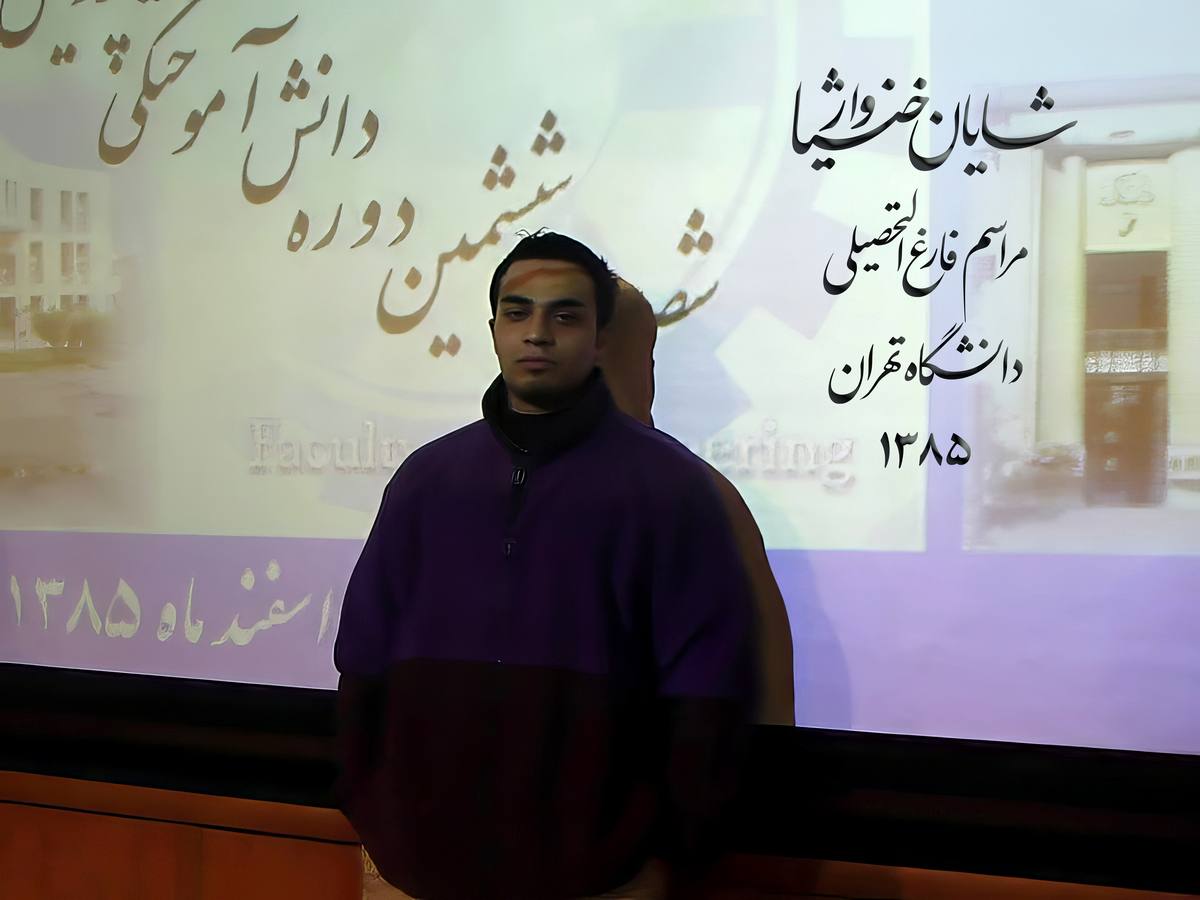
I then completed my Master's degree, also at the University of Tehran, in Geodetic Engineering — a discipline that sits at the intersection of mathematics, physics, spatial analysis, and computational modeling. The same mind that was writing rap verses at night was solving differential equations in the morning. I mention this not as a credential to display, but because it is directly relevant to everything I do now: when I research, I research with method. When I make an argument, I build it the way you build a proof.
That foundation did not stay in the classroom. Today, the same tools that map the earth's surface — spatial data, modeling, systems thinking — are part of how I work professionally. I currently operate as a Geospatial Data Scientist and International Education Consultant. Two fields that sound unrelated until you understand that both are fundamentally about navigation: one maps physical terrain, the other maps the paths that people take through institutions, borders, and opportunity. If either of those fields sounds like something you need — you know where to find me.

There is a specific kind of freedom that comes from this combination. I do not need approval from any institution, any label, or any political faction to have credibility. My credibility comes from the tracks and from the theorems — and neither of those can be taken away.
Chapter Four
The Music: Everything Built by Hand
One thing that distinguishes my work from much of what exists in Persian rap is that I do all of it myself. I write the lyrics. I produce the beats. I mix and master the final track. There is no room for a middleman between the idea and the sound that reaches you — and that is intentional.
My main sonic territory is Northern California hip-hop — the Bay Area tradition of measured, atmospheric, deliberate production — fused with authentic Persian sensibility. Not Persian decoration on top of American music. A genuine hybridization, where the language, the references, the cultural weight of Iran are embedded in the structure of the music itself.
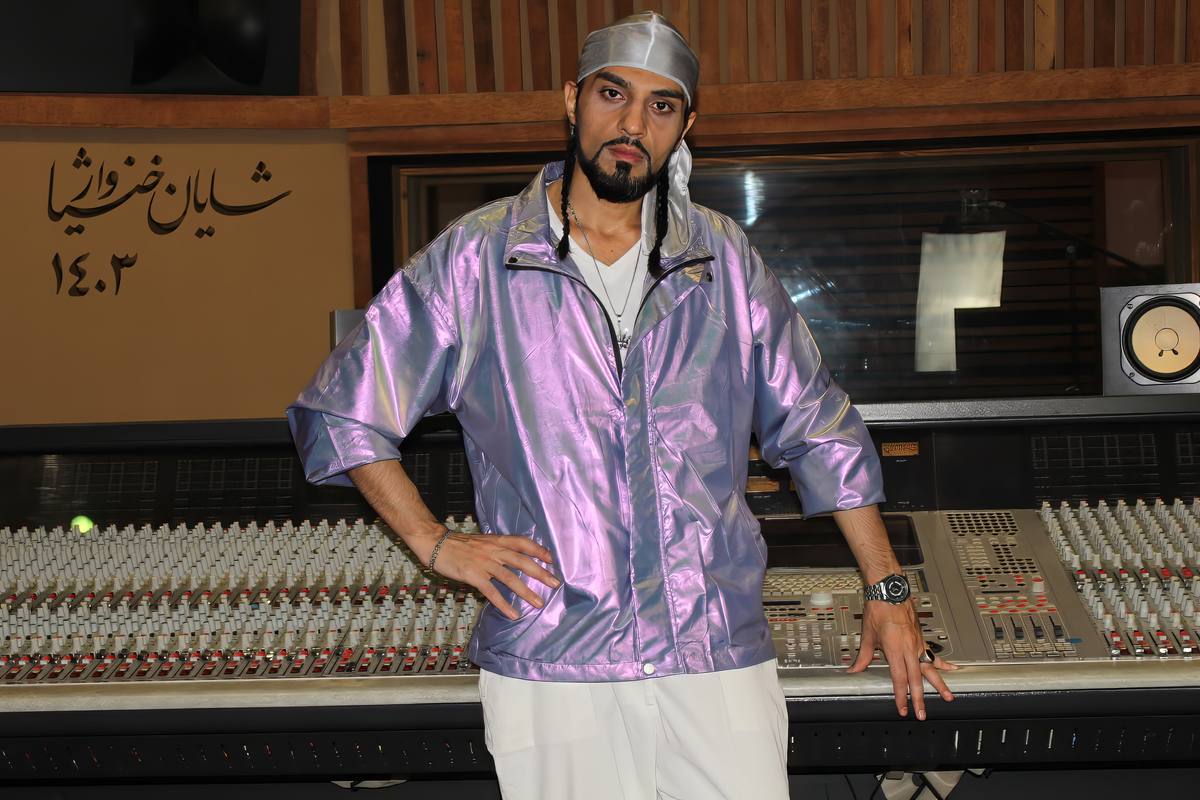
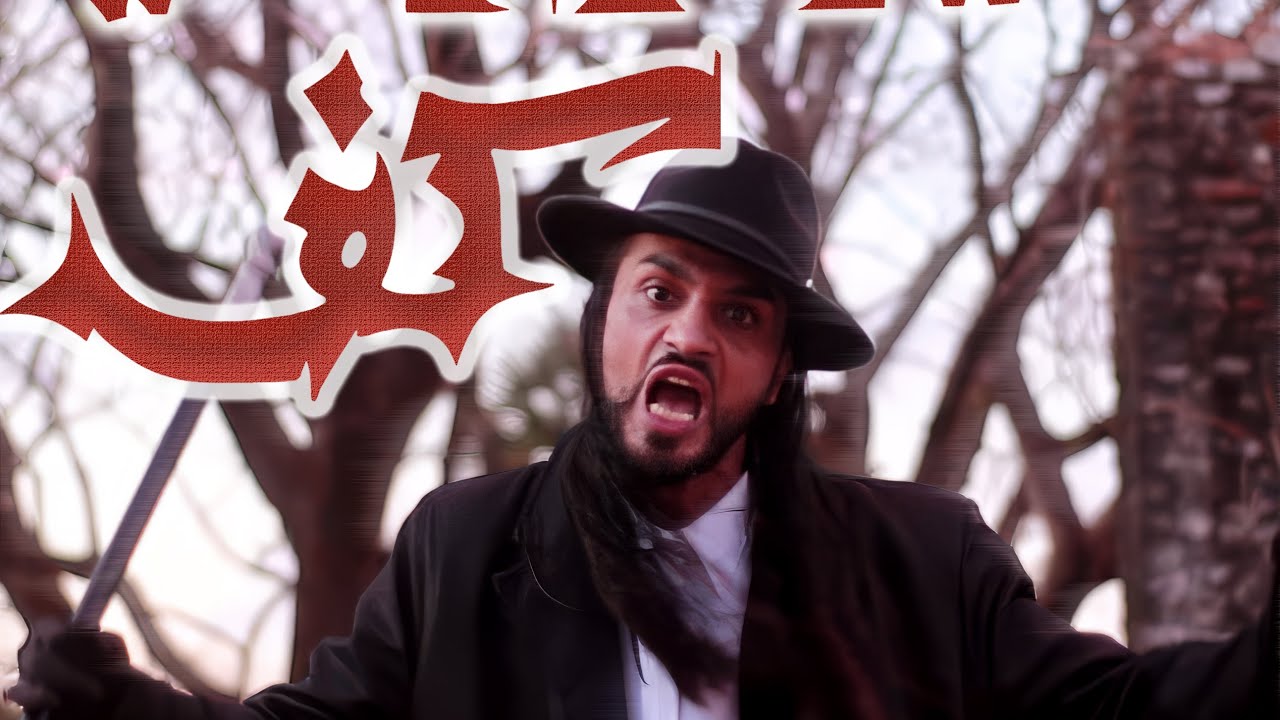
I also work in horrorcore — a subgenre I brought into Persian rap with "Man Barat Mikhoonam" in 1380, long before anyone else had touched the concept. The 2024 track "Kaf," with its cinematic music video, is the fullest expression of this tradition to date: a multi-layered narrative about guilt, hidden truth, and the violence of self-reckoning, told through three voices and built entirely by my own hands.
VaajKhonya — Daftar-ha (Chapters 1–4)
The underground mixtapes that founded Persian rap. Four volumes — Shekaft, Akhgar, Gosil, KhoonKhonya — recorded and distributed informally, now available on the VaajKhonya Telegram channel. These are primary documents of Iranian music history.
Underground / Foundational/
2023
Return Singles: Ostore Maram, Khashm-e Khojaste, Tragedy-e Jenai, Bioft Zamin, Zan Zendegi Azadi, Raftegan
The official return to the scene after years away. Six tracks re-establishing VaajKhonya's presence — political, spiritual, and sonic — in a changed Iran.
West Coast / Gangsta Rap/
2024
Kaf (Single)
The definitive Persian horrorcore statement. Features Hooshang and Shahpour. Written, produced, mixed, and mastered entirely by Shayan.
 ▶ Watch Music Video on YouTube
Horrorcore
▶ Watch Music Video on YouTube
Horrorcore
/
2025
Hipnoz (Album)
Available on Spotify. A full-length project marking a new phase — sonically ambitious, politically awake. Features Houshang, a loyal founding member of VaajKhonya from the very beginning — a brother in the truest sense, who has stood beside this music since the first day.
Album/
2026
Se Sar Ejdaha — Three-Headed Dragon (Album)
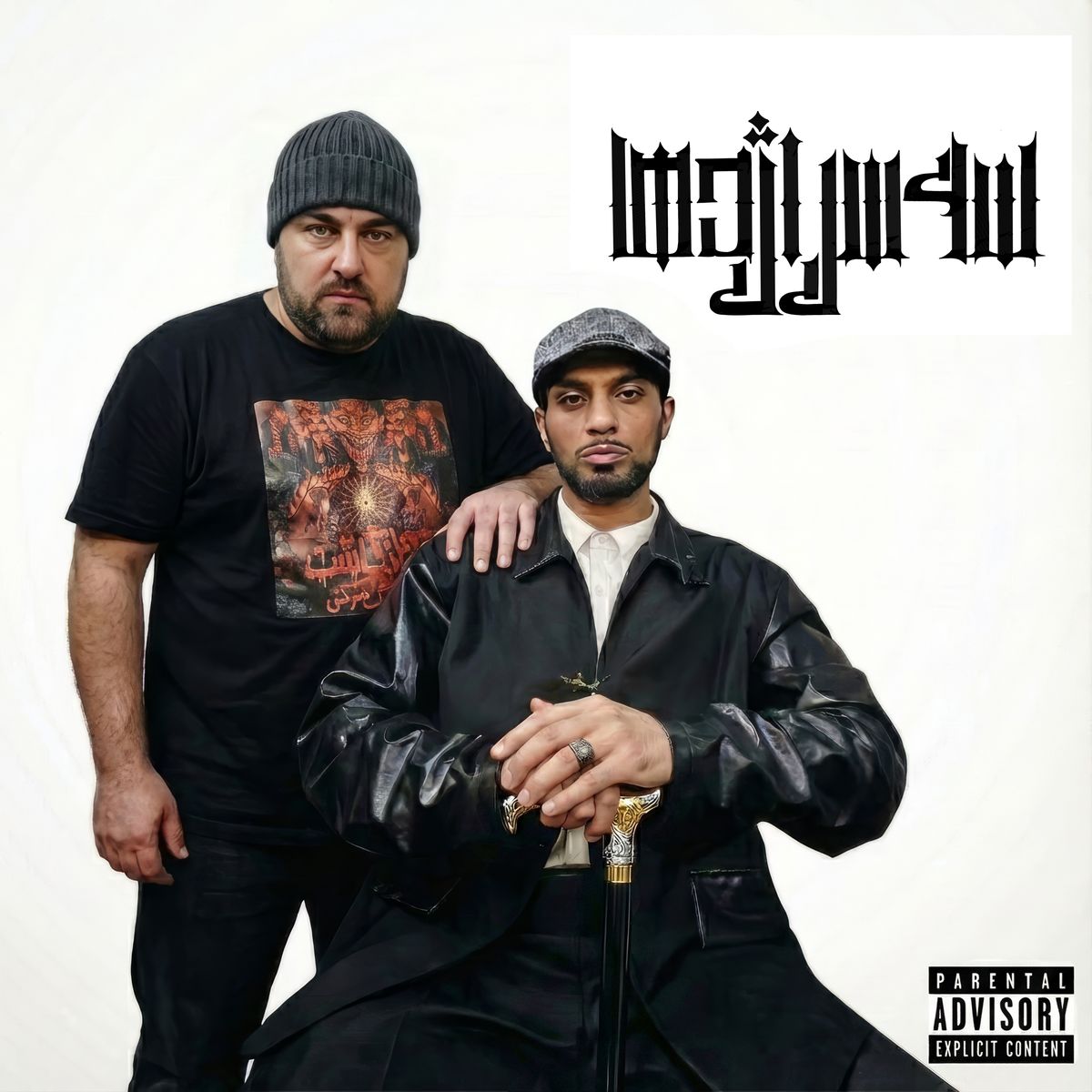
Available on Spotify. Nine tracks rooted in Iranian mythology and street philosophy. Closes with "Moshte Akhar" — The Last Punch — a track calling on the sons and daughters of Jamshid to stand up and reclaim their history. Written in the year of the Iranian protests and the Iran-Israel conflict. Meant to last.
2026 · Mythological Gangsta RapChapter Five
The Birth of Vajgar
Over the past years, something expanded. The music was always there, but a new channel of expression opened — speeches, research, analysis. I began publishing detailed, sourced articles on Medium on topics ranging from Persian linguistic history to Iranian constitutional law to the archaeology of Iranian civilization. These are not opinion pieces. They are researched arguments built on primary sources — the kind of work that reflects two decades of reading seriously across multiple disciplines.
At the same time, I began releasing video speeches — on Iranian identity, on the mythology of Jamshid, on the political structure of the Islamic Republic, on geopolitics, on the meaning of Nowruz, on what it means to call yourself Iranian. These videos found an audience far beyond the hip-hop world: historians, engineers, students, members of the diaspora, and people inside Iran who recognized someone speaking plainly and with evidence.
The name Vajgar — drawn from the same root as VaajKhonya — became the identity for this broader work. The rapper became a voice. The voice became a researcher. The researcher became something harder to categorize, which is exactly as it should be.
Chapter Six
On Sungazing and the Inner Work
Some of you found me through a different kind of video — footage of me sungazing at sunrise, speaking about light, perception, and human potential. A few of these videos reached a wide audience and sparked real conversations.
I practice the HRM (Hira Ratan Manek) sungazing method. I want to be absolutely clear about something I have stated many times publicly: this practice carries real risk if done incorrectly. I am not recommending it to anyone who approaches it without proper knowledge, experience, and ideally the guidance of a qualified coach. I share my own experience, not a prescription. Anyone who practices sungazing irresponsibly — especially at the wrong hours or without progressive conditioning — can damage their eyesight. I take this responsibility seriously.
What I will say is that the inner dimension of this work — the confrontation with silence, with light, with the body's actual capacity for stillness — has shaped how I think and how I speak. I believe in the interior life. I believe in discipline as a spiritual act. And I believe that a man who cannot sit with himself has no business speaking to thousands of people.
Chapter Seven
Where I Stand — Clearly, Without Performance
I support a secular constitutional monarchy for Iran. This is not nostalgia — it is a reasoned political position arrived at through years of studying Iranian constitutional history, comparative governance, and the specific failures of the current system. I believe Iranians deserve a constitution that belongs to human beings, not to a turban.
I am a Shia Muslim. I say this not to preach, and not to seek approval. I say it specifically because the propagandists of the Islamic Republic have spent decades claiming that support for Prince Reza Pahlavi comes only from secular or non-Muslim Iranians. That is a lie. I am a practicing Shia Muslim, I have studied Islamic jurisprudence seriously, and I have concluded — after years of research — that the doctrine of Velayat-e Faqih has no authentic foundation in classical Shia theology. The Guardianship of the Jurist was a political invention, not a religious inheritance. And I say that as a believer, not as a critic of faith.
I support Prince Reza Pahlavi as a national symbol and a viable path toward a free, democratic Iran under constitutional monarchy. My support comes from conviction, not from tribe or tradition.
I call myself a son of Jamshid — not of Cyrus. This is a deliberate cultural statement. Cyrus was great. He was also late. Iranian civilization is 7,000 years old. When Ferdowsi, Hafez, and Sa'di reach for the deepest symbol of Persian identity, they reach for Jamshid — not Cyrus. I follow the poets.
Chapter Eight
Right Now, In 2026
The Iran of 2026 is not the Iran of 2001. The protests have reshaped the conversation. The conflict with Israel and the United States has changed the calculus for every Iranian who cares about their country's future. I have been speaking into this moment — not as a pundit, not as an activist with a party card, but as someone who was born in Tehran, who studied at the University of Tehran, who built something real from nothing in the streets of that city, and who has spent years reading and thinking carefully about where we came from and where we could go.
The album Se Sar Ejdaha — Three-Headed Dragon — was made in this moment, for this moment. Its final track, "Moshte Akhar," closes with a line I mean entirely:
با جوهر خون دلیران بازنویسی میکنم — تاریخ رپ که هیچ، کل تاریخ ایران
مشت آخر — شایان
I am rewriting — with the ink of the blood of the brave — not just the history of rap, but the whole history of Iran.
That is an ambitious line. I know it. I wrote it anyway, because ambition in service of your people is not arrogance — it is obligation.
Finally
Why This Biography Exists
Thousands of new people have been joining this channel in recent weeks. You deserve to know who is speaking. Not a Wikipedia summary — an honest account.
I am an engineer with a first-class master's degree from the University of Tehran. I am the founder of Persian rap. I write, produce, mix, and master my own music. I research Iranian history, mythology, linguistics, and political science, and I publish that research publicly for anyone to read and challenge. I was born in Tehran and lived there until I was 28. I am a Shia Muslim who supports secular constitutional monarchy. I practice sungazing carefully and responsibly. I have been at the service of Iranian people — through music, through speech, through research — since 1380.
None of this makes me infallible. I have been wrong before and I will be wrong again. What I can promise is that when I speak, I have done the work. And when I have not done the work, I will tell you so.
Everything else — the music, the articles, the speeches — is available. Dig in. Push back. Ask hard questions. That is the only relationship I am interested in.
Follow on Instagram:
@shayanrapper
Listen to the latest albums:
Hipnoz (2025) on Spotify
Se Sar Ejdaha (2026) on Spotify